Welcome.htm - Microsoft Internet Explorer
Address
🌐 C:\Desktop\Welcome.htm
Welcome to my Homepage!

Whether this brings back fond memories or you're experiencing Windows 95 for the first time, you've landed on my interactive portfolio! Feel free to click around, have fun navigating it, and discover the hidden easter eggs along the way ٩(◕‿◕。)۶
Welcome.htm
About Me.htm - Microsoft Internet Explorer
Address
🌐 C:\Desktop\About Me.htm
Mario Valerio David Mignemi

Mario Mignemi

Software Engineer — Backend Specialist, Java / Spring Boot

OPEN TO WORK

Permanent employment, freelance, or contract work

How I approach backend engineering:

1
Test automation — An essential step in shipping bulletproof code
2
Performance Profiling — When a slowdown isn’t obvious, profilers are my best tool.
3
Built for Longevity — Code meant to last, resulting in fewer follow-up bugs and redesigns.

Explore to uncover all 4 case studies!.

About Me.htm — open to work
Details.htm - Microsoft Internet Explorer
Address
🌐 C:\Desktop\Details.htm
Mario Valerio David Mignemi

Mario Valerio David Mignemi

Born 1994 · Italian · Vienna, Austria

~7–8 years backend (Java / Spring Boot specialist)
~10 years total IT (includes brief frontend & some Node.js)

Career path (anonymized, no employer names): intern (2017) → consulting Milan (2017–18) → consulting Vienna (2018–19) → consulting (2019–20) → non-consulting employer (2020–21) → senior Java developer role ending 2024.

Testing: At every company he asked for permission to write tests — granted every time. Rarely sees others write them. Prefers integration tests that exercise the full Spring stack; accepts the speed trade-off because they catch cross-layer issues unit tests miss.

Open for full-time or long-term (1+ year) contract. Remote preferred, not mandatory.

Main skills

  • Java, Spring Boot, Spring Security
  • Docker (containerizes his own services)
  • SQL, NoSQL, JPA / Hibernate
  • Kafka, event-driven development, microservices
  • JUnit, Mockito, Spring integration tests, Testcontainers

Backend / Java / Spring Boot specialist only. Partnering with frontend and DevOps teams is an intentional specialization choice.

  • Italian — native
  • English — fluent
  • German — advanced (companies have asked him to conduct entire interviews in German)
  • Spanish — advanced
  • French — basic
  • Japanese — basic

Certifications (2025, after last employment), via Baeldung:

  • Advanced Spring Security Core — completed
  • Advanced Spring Security OAuth2 — in progress

He has never used AI professionally (last role ended before ChatGPT’s release). Real AI usage is on the personal Unity game project:

  1. Test scaffolding: new to Unity testing (little documentation exists), he asked AI for example tests. The examples were mediocre quality but useful as a starting point.
  2. Asset recovery: when the Unity project broke (missing scene-file references), he had AI analyze the broken references and cross-reference Git history to recover the removed files — a mechanical, low-judgment task he deliberately delegated.

He can also run AI agents locally and uses API aggregator platforms that provide unified access to multiple AI models.

Details.htm
Portfolio — File Explorer
4 object(s)
How_I_Work.txt - Notepad

How I Work

The three strengths that appear throughout the case studies:

  1. Test automation (and TDD where it fits) — asked for permission to write tests at every company; granted every time. Prefers integration tests that exercise the full Spring stack.
  2. Finding and fixing performance issues (profiling-driven) — uses tools such as VisualVM to isolate slow methods rather than guessing.
  3. Precision / quality over quantity — careful concurrency reasoning, safe refactoring practices, and explicit trade-off decisions.
Talks.txt - Notepad

I led technical deep-dives on:

  • Clean Code — Robert Martin's Clean Code to promote development best practices.
  • Java Streams — When parallel streams beat traditional for-loops (and when they don't), backed by benchmarks.

Want to read my blog later? Catch my articles on Dev.To: https://dev.to/mario_mignemi
Case A Ingestion.ppt - Microsoft PowerPoint

CASE STUDY A

High-Throughput
Data Ingestion Platform

A modular, high-scale pipeline handling millions of records a day.

The Challenge

  • The team needed an tool similar to ksqlDB, but required full query flexibility that off-the-shelf streaming frameworks couldn't provide.
  • Standard Kafka topic consumption was too slow.
  • Even partition-level polling bottlenecked on high-volume streams.

Parallel Processing Engine

  • Engineered a custom ingestion service using low-level Kafka APIs to stream directly into MongoDB.
  • By slicing individual partitions into sub-segments, work was distributed across parallel threads.
  • Throughput was boosted far beyond Kafka native limits.

Data Integrity & Deduplication

  • Splitting partitions dynamically introduced race conditions and out-of-order writes.
  • Duplicate payloads were handled with an upsert-with-recency pattern.
  • Result: Newer messages never got overwritten by stale ones.

Comprehensive Testing Suite

  • ~200 custom integration tests.
  • Covered standard functional queries and high-concurrency edge cases.
  • Built to expose race conditions and keep things stable through core refactors.
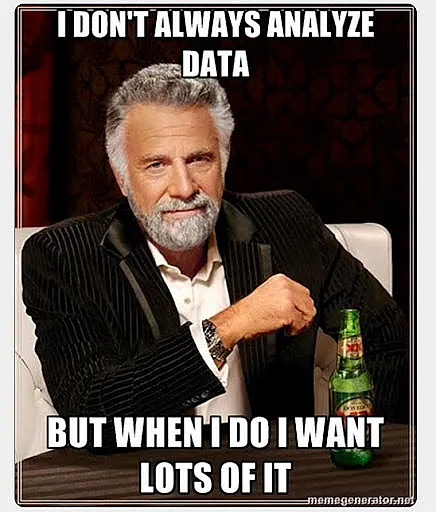
I don't always analyze data, but when I do I want lots of it — meme
1 / 6
Slide 1 of 6
Default Design
Case B ContactSync.ppt - Microsoft PowerPoint

CASE STUDY B

Automated HR
Contact Sync

A Spring Boot contact-sync engine, built from scratch, end to end.

The Challenge

  • The organization relied on a legacy phone book system with no automated sync or conflict-resolution mechanisms.
  • HR staff lacked accurate contact details when candidates called.
  • Team members had to patch records by hand with an undocumented script.

Architecture & Delivery

  • Architected, built, and deployed the entire Spring Boot service from end to end.
  • Scheduled jobs handled overnight cloud synchronizations.
  • REST API endpoints covered on-demand sync.

Data Migration & Conflict Resolution

  • Built a systematic conflict-resolution algorithm to handle data collisions gracefully.
  • Unresolvable conflicts are stored in a file for manual review.

Full Project Autonomy

  • Got carte blanche from concept to delivery, no oversight.
  • The kind of trust and operational freedom that rarely exists in software projects today.
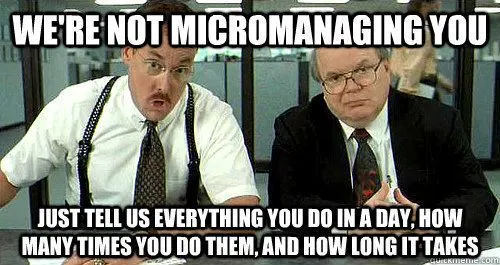
Micromanagement meme
1 / 6
Slide 1 of 6
Default Design
Case C CruiseBooking.ppt - Microsoft PowerPoint

CASE STUDY C

Cruise Line
E-Commerce Platform

Refactoring a legacy global booking platform
(without sinking the ship, no pun intended)

Context

  • Legacy global booking platform, configurable at a very granular level, down to individual UI elements.
  • Configuration varied across region, language, ship, and ship-class.

The Problem

  • Because of the old tech stack, management became risk adverse, leading to copy-pasting code.
  • The same logic could be found duplicated in 4+ separate places.

Why It Backfired

  • Over time, this led to multi-thousand-line God files
  • Simple changes became very high-risk.
  • Bugfixes missed hidden duplicates.

My Approach to Clean Code Refactoring

  • Strangler Fig Pattern: replaced old duplicated code gradually, one path at a time, instead of a risky full rewrite.
  • Defensive Programming: validated data once at the entry point, finding bad inputs early before they could break the navigation flow.
  • Single Responsibility: split bloated functions and classes into smaller ones that each do one clear job, easier to test and safer to change.
  • Strategy Pattern: instead of one function branching for every region/ship-class, each variant became its own interchangeable module.

Result

  • Zero live UI regressions across the engagement.
  • One shared, configurable codebase instead of different drifting copies.
  • Changes that used to take days of archaeology now took hours.

Takeaway

  • Fear-driven duplication doesn't protect code, it accelerates its rot.
  • Changing or fixing legacy code doesn't require full rewrites — just consistent, incremental cleanup.
1 / 8
Slide 1 of 8
Default Design
Case D PerfIsolation.ppt - Microsoft PowerPoint

CASE STUDY D

Tired of Naming Fake Slides

Just let the database do database things

The Problem

  • A production request took hours to return.
  • Code inspection looked fine, nothing obviously wrong.

Investigation

  • Profiled the running application with VisualVM.
  • Isolated the slow method.

Root Cause & Fix

  • Large datasets were being pulled into memory to perform expensive filtering, joins and transformations via Java Streams.
  • Replaced the Stream pipeline with an optimized SQL query,

Result

  • Request time dropped from hours to seconds.
  • No over-engineering, no drama. Just the right tool for the job.

Takeaway

  • Intuition isn't always enough.
  • Clean code isn't just readable, it's measurable.
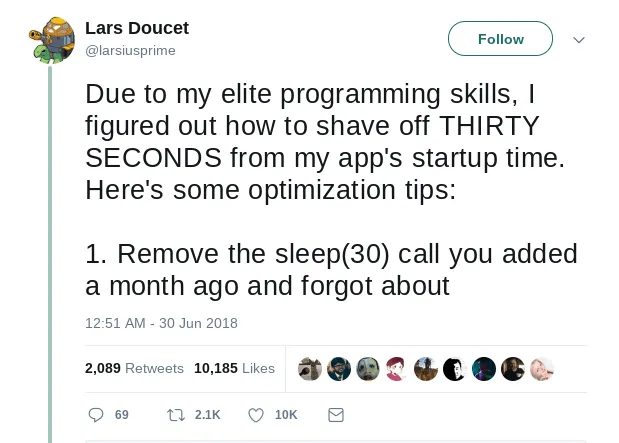
Optimization meme
1 / 8
Slide 1 of 8
Default Design
Inbox - Outlook Express

Select a message to read it.

1 item(s)
The Weight of One - Videogame - Microsoft Internet Explorer
Address
🌐 C:\Desktop\The Weight of One.htm

The Weight of One: The Jovarko Incident

Real-Time Tactical Space Combat Game (Solo Developer)

Inspired by Nexus: The Jupiter Incident, this is a narrative-driven game I've been building since 2023:

  • Architectural Evolution: Designed and evolved core systems through multiple full project rewrites.
  • Systems Thinking: Built with a focus on continuous learning, treating the project as a long-term engineering laboratory.
The Weight of One: The Jovarko Incident
The Weight of One - Videogame
Expense Categorizer.txt - Notepad

Expense Categorizer

Personal Finance Automation
A custom processing service built to learn the latest Spring Batch features while automating my own budgeting. Key capabilities include:

Private repository — Source code available upon request.
Make New Connection

Type a name for the computer you are dialing:

Select a modem:

Standard 28800 bps Modem
Connecting to Mario's Mail
Dialing...